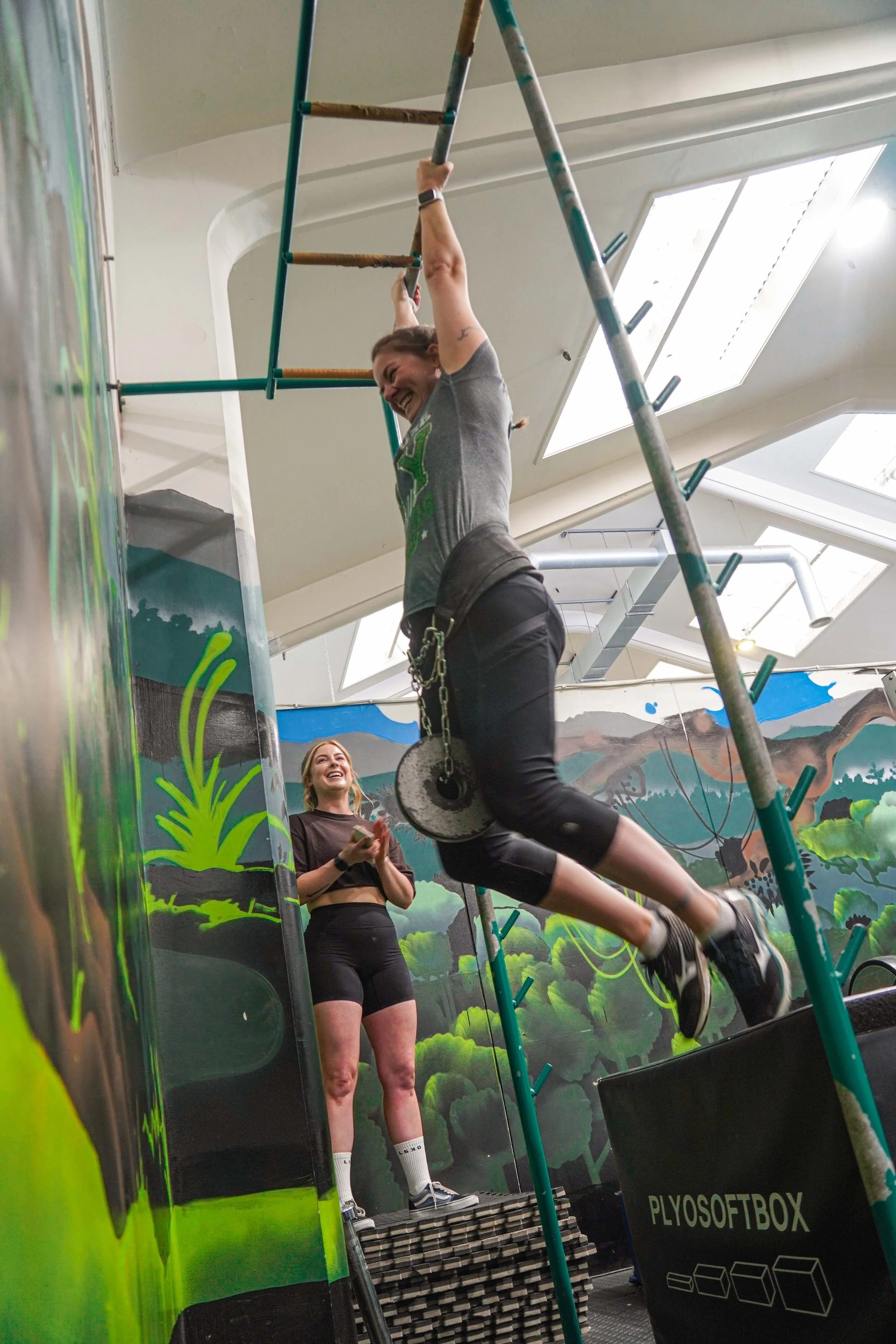
Calisthenics is a form of bodyweight strength training that uses exercises like push-ups, pull-ups, squats, and holds to build functional strength, muscle, and body control — no equipment required. For women, it is one of the most effective and accessible ways to develop real-world strength, improve posture, and build lasting confidence in your body.
If you've been curious about bodyweight training for women but don't know where to start, this guide covers everything: the foundational movements, a simple starter routine, how to progress, and the mistakes that trip most beginners up.
Why Calisthenics Is Incredible for Women
Let me be direct: calisthenics for women beginners is not a watered-down version of anything. It is strength training in its purest form. You're learning to move your own body through space with control and power. That translates to everything — carrying groceries, playing with your kids, feeling unshakable in your own skin.
Here's what makes it different from other forms of women's strength training:
- Functional strength: You build strength in patterns your body actually uses. Pushing, pulling, squatting, hanging. These aren't isolated muscles on a machine — they're full-body movements that make you capable.
- Body control and awareness: Calisthenics teaches you to own every inch of your movement. You develop proprioception — the ability to know where your body is in space — which reduces injury risk and makes you a better mover overall.
- Confidence that runs deep: The first time you hold a dead hang for 30 seconds, or nail a full push-up, something shifts. You stop seeing your body as something to shrink and start seeing it as something to build.
- Zero barriers to entry: No gym membership. No expensive equipment. A park, a floor, a doorframe pull-up bar. That's it.
"Strength isn't about how much you can lift off a rack. It's about how much you trust your own body."
The 5 Foundational Movements
Every calisthenics workout plan — female or male — is built on the same foundational patterns. Master these five and you have a training system that can carry you for years.
1. Push-Ups (Upper Body Push)
The push-up is the cornerstone of upper body calisthenics. It trains your chest, shoulders, and triceps while demanding core stability throughout.
Start here: If a full push-up isn't available yet, begin with incline push-ups — hands on a bench, step, or countertop. Lower the surface as you get stronger. Knee push-ups are fine too, but incline variations teach better full-body tension.
2. Rows (Upper Body Pull)
Rows are the counterbalance to push-ups and the foundation for pull-ups down the road. They strengthen your back, biceps, and rear shoulders — the muscles most women are undertrained in.
Start here: Use a sturdy table edge, a low bar at a park, or a TRX/ring setup. The more horizontal your body, the harder it gets.
3. Squats (Lower Body Push)
Bodyweight squats develop your quads, glutes, and hip mobility. They're also a gateway to more advanced movements like pistol squats and jumping variations.
Start here: Bodyweight squats to a chair or bench. Focus on sitting back, keeping your chest tall, and driving through your whole foot. Once you can do 15 clean reps, remove the chair.
4. Dead Hangs (Grip and Shoulder Health)
Hanging from a bar is one of the most underrated exercises in all of training. It builds grip strength, decompresses your spine, and develops the shoulder stability you need for pull-ups and beyond.
Start here: Find a pull-up bar or sturdy overhead surface. Hang with straight arms, shoulders slightly engaged (not shrugging into your ears). Aim for 10-second holds and build from there.
5. Core Work (Stability and Transfer)
Your core connects everything. Without it, your push-ups sag, your squats wobble, and your hanging work stalls. But forget crunches — think about resisting movement instead of creating it.
Start here: Dead bugs and plank holds. Dead bugs teach you to move your limbs while keeping your spine stable. Planks build the endurance to hold tension across your entire body.
A Simple 3-Day Starter Routine
This calisthenics workout plan for female beginners runs three days per week with at least one rest day between sessions. Each workout should take 30 to 40 minutes including warm-up.
Warm-Up (Every Session)
- 2 minutes of light movement (walking, marching, arm circles)
- 10 bodyweight squats (slow and controlled)
- 5 inchworms
- 10-second dead hang
Day 1 — Push and Core
- Incline push-ups: 3 sets of 8-10
- Bodyweight squats: 3 sets of 12
- Dead bugs: 3 sets of 8 per side
- Plank hold: 3 sets of 15-20 seconds
Day 2 — Pull and Lower
- Inverted rows: 3 sets of 6-8
- Split squats: 3 sets of 8 per leg
- Dead hangs: 3 sets of 10-15 seconds
- Glute bridges: 3 sets of 12
Day 3 — Full Body
- Incline push-ups: 3 sets of 8-10
- Inverted rows: 3 sets of 6-8
- Bodyweight squats: 3 sets of 12
- Dead hang: 1 set, max hold
- Plank hold: 1 set, max hold
Rest 60-90 seconds between sets. The goal is quality reps, not rushing. If the last two reps of a set feel sloppy, reduce the number. Clean movement always beats bigger numbers.
How to Progress Without Adding Weight
One of the best things about bodyweight training for women is that progression is built into the system. You don't need heavier dumbbells — you change the leverage, the range of motion, or the tempo.
Here are the primary ways to make any exercise harder:
- Change the angle: Lower your incline push-up surface. Make your rows more horizontal. Each step shifts more of your bodyweight into the movement.
- Add range of motion: Deeper squats. Push-ups with hands on parallettes for extra depth. More range means more work for your muscles.
- Slow it down: A 3-second lowering phase on a push-up is dramatically harder than a fast one. Tempo work builds strength and control at the same time.
- Add a pause: Pause at the bottom of a squat for 2 seconds. Hold the top of a row. Pauses eliminate momentum and force your muscles to work harder.
- Move to single-limb variations: Split squats become Bulgarian split squats. Two-arm rows become archer rows. Single-limb work doubles the demand.
The key principle: when you can do 3 sets of 12 with clean form, it's time to progress. Pick one variable — angle, tempo, range, or variation — and make the next step.
Common Beginner Mistakes
I've coached hundreds of women through their first months of calisthenics. These are the patterns I see again and again.
Skipping the Basics
Everyone wants the pull-up. Nobody wants to spend eight weeks on dead hangs and rows. But the basics are where your tendons, joints, and connective tissue adapt. Skip them and you'll hit a wall — or worse, an injury. The foundations aren't the boring part. They're the part that makes everything else possible.
Training to Failure Every Session
More is not better. Grinding out ugly reps until you collapse teaches your nervous system bad patterns. Stop each set with 1-2 clean reps left in the tank. You'll recover faster, progress more consistently, and actually enjoy your training.
Neglecting Pulling Movements
Push-ups are intuitive. Rows and hangs feel awkward at first. So beginners push three times as much as they pull, and end up with rounded shoulders and imbalanced strength. Pull at least as much as you push — ideally more in the early months.
Comparing Your Day 1 to Someone Else's Year 3
Social media is full of women doing muscle-ups and handstands. That's inspiring, but it's not your starting point. Your only comparison is last week's version of you. Did you add a rep? Hold five seconds longer? Clean up your form? That's progress. That's all that matters.
You Don't Need a Gym
Let me say this clearly: you do not need a gym to start calisthenics. A local park with a pull-up bar gives you everything you need for a complete training program. A doorframe pull-up bar at home costs less than a single month of most gym memberships.
For your first few months, you don't even need that. Push-ups, squats, dead bugs, and planks can all be done on your living room floor. The best workout program is the one you actually do — and removing the barrier of "getting to the gym" makes consistency dramatically easier.
As you progress, you might want a pull-up bar and a set of gymnastic rings. That's roughly $50 total. Rings especially are worth their weight in gold — they let you scale rows, dips, push-ups, and eventually more advanced skills, all from a single piece of equipment you can hang anywhere.
Where to Go From Here
Start with the 3-day routine above. Run it for 4-6 weeks. Focus on nailing the form, building consistency, and getting comfortable with the movements. Don't add complexity — add quality.
After that initial phase, you'll have a clear sense of your strengths and weaknesses. Maybe your push-ups are solid but your rows need work. Maybe your squats are strong but dead hangs are a struggle. That data tells you where to focus next.
Calisthenics isn't a quick fix. It's a practice — one that compounds over months and years. The women I coach who see the most dramatic transformations aren't the ones who train the hardest in week one. They're the ones who are still showing up, still progressing, still trusting the process in month six.
You already have everything you need to start. Your body is the gym. Now use it.
